 Tvoi Event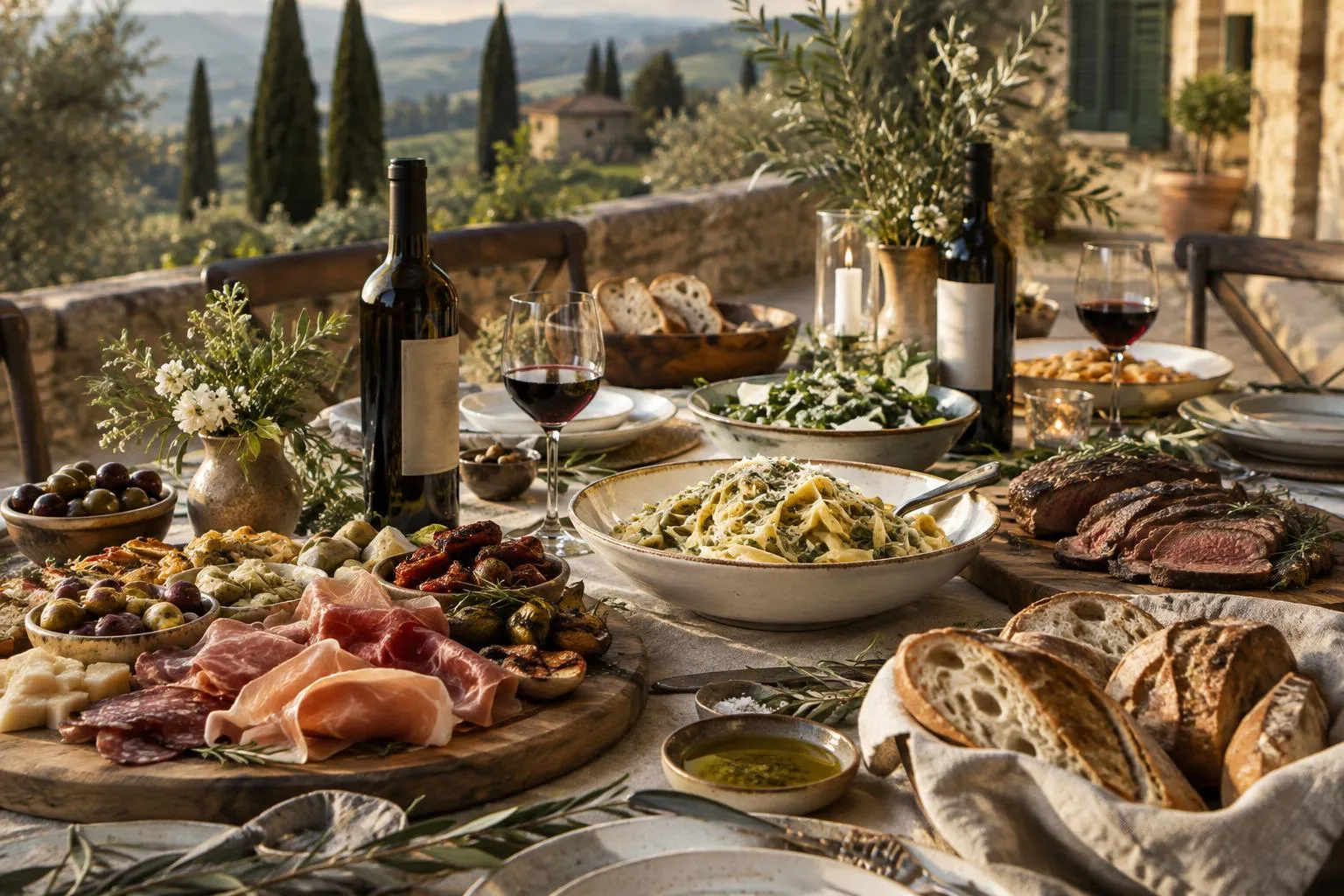
An Italian celebration meal is not simply a dinner but a sequence that runs for several hours and follows its own logic. Guests expect an aperitivo, antipasti, pasta, meat or fish, dessert and a cake, and each stage has its place and its time. Tuscany adds seasonality: what is served in May differs from the October menu, and the wines of the region have long been part of the celebration. Below is a breakdown of the menu structure and the principles worth following, so that you end up with a coherent meal and not a set of random dishes. We cover the order of courses, seasonal products, regional wines and how to prepare for a tasting.
The classic order of the meal
A traditional celebration meal opens with an aperitivo: light bites, sparkling wine and time to talk while guests gather. Antipasti follow, served at the table or as a buffet. Then come the primi: pasta, risotto or soup. After them the secondi: meat or fish with a side. The meal closes with dessert, the cake and coffee. This sequence has a purpose: it stretches the evening and leaves room for speeches, dancing and photographs. Modern couples often shorten the format by dropping one course or replacing pasta with two kinds of antipasti, but the order is usually kept. If you want to depart from the classic, for example by serving everything family style, discuss it with the chef early.
Aperitivo and antipasti
The aperitivo sets the tone and lets guests get to know each other while photographs are taken. It usually consists of light cold bites, several kinds of bruschetta, cheeses and cured meats. In Tuscany local products fit well: pecorino, Tuscan prosciutto, crostini with liver pate, seasonal vegetables. Sparkling wine, a light white and non-alcoholic options should all be on offer. Antipasti at the table are usually of two kinds, cold and warm. Do not overload this stage, so guests are not tired before the main dishes. Decide in advance how to serve: plated for each guest or on shared platters. For big celebrations plating is easier to organise, while for small family evenings sharing creates the atmosphere of a home table.
Primi and secondi
In Tuscany a primo might be pasta with a rich sauce, risotto, gnocchi, pici or a soup of seasonal vegetables and bread. Pasta is prepared ahead but must be served hot, which is a task for the kitchen: the dish should be chosen with the guest count and the villa kitchen in mind. The secondo is most often meat, such as beef, lamb or wild boar, or fish, especially closer to the coast. Many guests have restrictions: vegetarians, allergies, gluten intolerance. Ask the caterer to plan separate dishes rather than removing one component from the shared plate. A separate children's menu is often prepared and served earlier, so the children can eat and play. The number of guests with special needs should be given to the kitchen early, together with the seating list.
Dessert, cake and bar
Dessert follows the main course. In Italy the cake is often cut in front of the guests, and the cutting is a separate part of the programme with its own music and photographs. The classic Italian celebration pastry is a layered cake with cream and berries, but the choice is wider: from light mousse desserts to tables of sweets. After that the open bar begins: cocktails, wine, spirits, coffee and water. Decide how long it runs and which drinks are available, because that affects the number of bartenders and the way the evening ends. Late in the night guests often like something savoury, and a small snack or pizza helps keep energy up and softens the goodbyes.
Seasonal Tuscan products
In spring the menu fills with young vegetables, asparagus, artichokes and herbs; in summer with tomatoes, aubergines, courgettes and juicy fruit; in autumn with mushrooms, chestnuts, pumpkin and truffle; in winter with hearty soups, meat and cheeses. A menu built around the season tastes better and is more convincing: the produce is at its peak, suppliers find it easily, and guests receive something tied to the place. Do not insist on dishes out of season: tomatoes in November and strawberries in winter will not taste better for it. It is wiser to choose what is best in the region now and give the chef freedom. Many caterers build a proposal around the date rather than from a fixed catalogue, and it is worth asking each one you contact.
Tuscan wines and the tasting
Tuscany is known for wines that are easy to bring into a celebration. Chianti Classico pairs well with pasta and meat, Brunello di Montalcino suits slow-cooked beef, Vernaccia di San Gimignano is a fresh white for the aperitivo and fish, and the wines of Bolgheri offer a more modern style. With dessert it is traditional to serve Vin Santo alongside almond biscuits. Before the final menu is chosen, hold a tasting: try the dishes, the service and the wines together. It is the only way to see how the dinner will look and to make changes. Agree in advance how many people may attend, and think about pairing wines with dishes, not only about the reputation of labels. Do not forget non-alcoholic options and water.
Menu checklist
- Choose the format: seated dinner, buffet or sharing
- Pick dishes that match the season
- Collect guests' allergies and special diets
- Plan a separate children's menu
- Hold a menu and wine tasting before confirming
- Decide how long the open bar runs and what it includes
- Plan the moment of the cake cutting
- Add non-alcoholic drinks and water
A menu shaped around your celebration
Tvoi Event selects the caterer, organises the tasting and fits the menu to the season and the guest count. Send a request through the form or WhatsApp and we will prepare a written estimate.