 Tvoi Event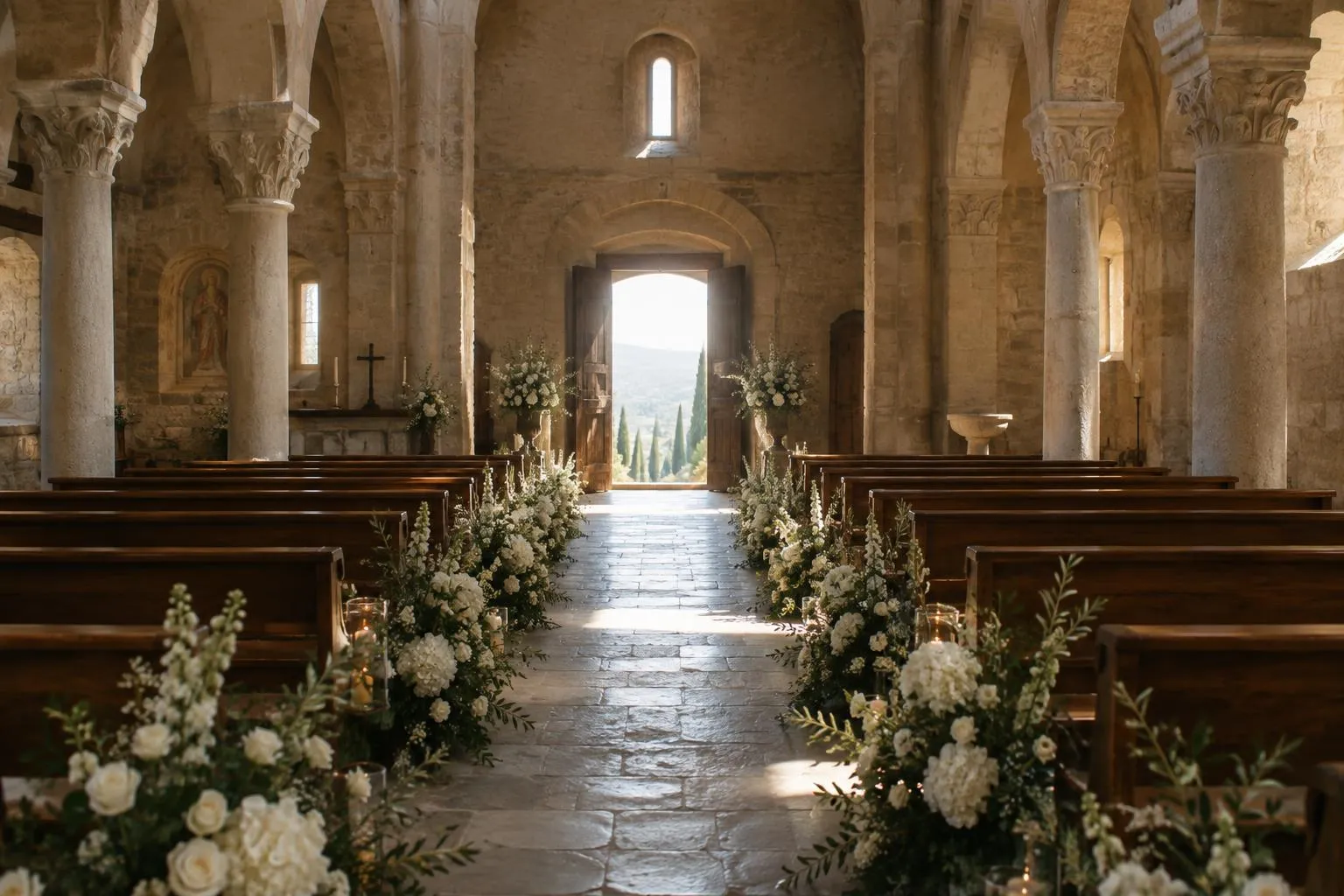
A wedding in an old Tuscan church looks beautiful, but it is not only a place: it is a church rite with its own conditions. For foreigners the path consists of several stages, and many of the conditions are set by the parish itself, so the first conversation should be with the parish. Below we explain who can normally marry in church, what paperwork is needed from the home parish, what marriage preparation involves, how the matter relates to civil registration and what couples can do if a Catholic wedding is not an option. Every condition is confirmed with the parish: we describe the general order, not guarantees, and the guide should not be taken for an official answer.
Who can marry in a Catholic church
A Catholic wedding normally requires that at least one spouse is a baptised Catholic. If the other is not Catholic or not baptised, special permissions may be possible, but they are granted by church authority and the procedure depends on the case. This is decided not by the event organiser but by the priest and the diocese, so verbal assurances should not be relied on. If you belong to another Christian denomination, do not be surprised if additional conversations and documents are needed. For couples in which neither partner is Catholic, a Catholic wedding is usually not possible, and then it is worth looking at the alternatives described at the end of this guide. Every condition is confirmed in writing with the parish priest.
Paperwork from the home parish and marriage preparation
A parish usually asks for papers from your own church: a baptism certificate and sometimes other church documents confirming that you are free to marry. Request them early: they can have a validity period and sometimes need translation or certification by the diocese, which takes time that is hard to predict. Couples normally go through marriage preparation: conversations with a priest or a course in a parish. If you live abroad, the preparation can sometimes be done in your home parish and confirmed by a certificate in Italy, but this is for the parish to decide. Ask in advance what format of preparation is accepted and in which language it is given.
Consent of the local parish and the diocese
A wedding in a Tuscan church is possible only with the consent of the parish priest and, as a rule, of the diocese the church belongs to. Not every church accepts weddings of visiting couples: many beautiful historic churches are in active parish use, and some are under special restrictions. So do not choose a church only from photographs, and do not book a reception before the parish has replied. First approach the parish, find out whether they will accept you, which dates are possible and in what language the service is held, and only then choose the venue for the celebration. An exact time for the reply cannot be promised, as it is determined by the parish.
The civil effect of a church wedding
A Catholic wedding in Italy can also have civil effect if it is registered. This adds civil paperwork and steps: which ones depends on the citizenship of both partners and is confirmed with the comune and the consulate. Not every couple wants to go through this procedure, and for some the church rite alone is enough. If it matters to you that the marriage is valid in your own country, check beforehand how Italian registration is recognised at home. Some couples separate the two steps: civil registration on its own, and a church rite in Tuscany for family and guests. Make the choice early, so that the documents are not gathered for the wrong scenario and guests receive a clear invitation.
The wedding day: language, music, flowers and photography
The service is led by the priest, and the order of the rite is set by the church. The language of the service, the readings, the participation of guests, the music and singing are agreed with the parish: sometimes there is an organist or choir of its own, sometimes you can bring your own musicians. Flowers and decoration are also subject to the rules of the church, and photography during the service may be restricted. Find out the dress code for guests, such as covered shoulders, and the length of the service, especially if it includes a Mass. Plan the guests' move to the celebration so that nobody has to hurry: after the church there is usually an aperitivo, and the timing is best left with a margin, especially if the church and the venue are in different towns.
Alternatives: a symbolic blessing
If a Catholic wedding is not suitable, couples choose other formats. Some marry in a civil ceremony in Italy or at home and then hold a symbolic ceremony with their guests. Some invite a priest for a blessing, but the possibility of such a blessing cannot be taken as guaranteed: that is up to the priest. A symbolic ceremony has no legal force but is free in place and script: a villa garden, a terrace, a chapel on private property with the owner's consent. This format suits couples of different faiths and those who want a ceremony in their own language. Which path to take depends on your convictions, your documents and the wishes of your family.
What to find out before choosing a church
- Whether at least one spouse is a baptised Catholic
- Which papers are needed from the home parish
- The format and language of the marriage preparation
- The consent of the parish priest in Tuscany and of the diocese
- Whether civil registration is needed together with the church wedding
- The church's rules on music, flowers and photography during the service
- The dress code and the length of the service
- A backup scenario: civil registration and a symbolic ceremony
We organise the day once the parish has replied
When the parish has confirmed its conditions, we build the day around the service: transfers, aperitivo, dinner and guests. A written estimate is prepared on request before preparation begins.