 Tvoi Event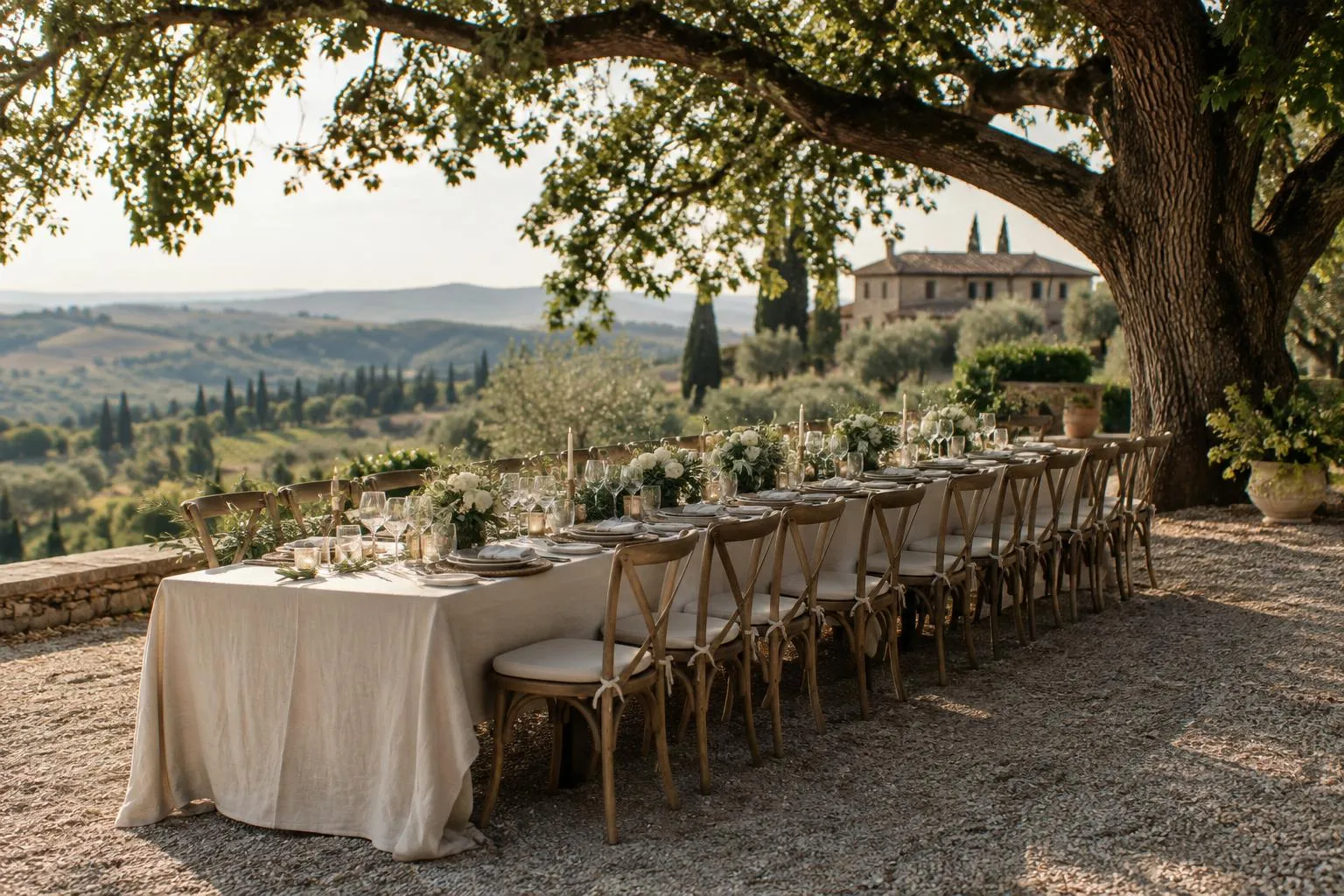
A wedding for up to thirty people works differently from one for a hundred. You can take a whole villa, lay one long table, talk to every guest and not chase scale, which is usually set by the venue anyway. But it is not a shrunken version of a large wedding: the criteria for the venue, the list of vendors and the lead times all change. Much of it comes down to attention to detail rather than budget. Below you will find how planning a small wedding differs, what to look for in a venue, how to arrange accommodation, and where time is saved and where more attention is needed than it seems at first, especially when guests stay on the same property as you.
How the logic of a small wedding differs
At a large wedding the main task is managing the flow of people: seating, order of events, staff. At a small one there is no flow, and the whole logic is built around atmosphere. Guests see every detail, so the quality of food, service and place matters more than the scale of the decor. A small wedding has another advantage: the format can change until the last moment. Dinner moves to the terrace, the ceremony to the garden, lunch becomes a long family table. Venues with a rigid programme suit this less. Look for places where the team will adapt, rather than follow a standard package, because with a small group nobody can get lost in the crowd.
Choosing a venue for a small group
For thirty guests a whole villa, a small estate, a borgo or a private garden works well. Big halls are not needed; empty space makes the evening feel cold. Ask how many people the venue hosts comfortably, not at maximum, and whether you can hire it exclusively so that no other guests are on the property. Check three things: whether there is shelter if it rains, where the ceremony is held and where it moves afterwards, and what limits apply to music and evening hours. These rules depend on the venue and the municipality, and it is better to learn them before signing. If the view matters, visit at the time of day when the ceremony will take place.
One long table and the shape of the evening
A single shared table is the defining image of a small wedding. Guests sit close, talk across the table, and speeches need no microphone. It removes the need for a multi-table plan, but it calls for thoughtful seating: place the more talkative guests next to the family and mix friends from different groups. Keep the schedule unhurried. Aperitivo, ceremony, a long dinner with several courses, toasts between dishes, dessert and music. There is no need for a minute-by-minute programme; a host or coordinator who senses the pauses is enough. A menu of four or five courses for a small group is prepared by hand, and the chef can take each guest's wishes into account.
The villa as accommodation: a wedding weekend
For a small wedding it is convenient when guests stay on the same property. There are no night transfers, the morning after becomes a shared breakfast, and the evening before needs no travel. Check the number of beds, but also the bathrooms, the position of the rooms and how to place elderly guests and families with children. If not all guests fit at the villa, find lodgings nearby, within a short drive, so the return at night takes only a few minutes. Keep in mind that owners often set their own rules for arrival and departure when guests stay, and the wedding days must be matched with the guests' own travel plans.
Fewer vendors, more attention to each
A small wedding usually involves fewer people: a photographer, a florist, a chef or caterer, a musician, sometimes a host. This simplifies coordination but raises the importance of each. One unsuitable photographer or a weak cook is noticed at once, because there is nothing to compare with and nowhere to hide. So arrange a tasting, look at a photographer's full galleries rather than the best frames, and discuss in advance how each professional works in a small space. It also helps to agree who will mingle with guests and who stays unobtrusive. Get the estimate in writing before preparation starts so that it does not have to be revised along the way.
Lead times and typical mistakes
A small wedding comes together faster: many couples manage it in a few months. But the choice of small villas in popular months is limited and the best dates go early, so look for the venue as soon as the period is decided. If documents are needed for a legally binding ceremony, the timing depends on citizenship and is confirmed with the comune and the consulate; a symbolic ceremony has no legal force. Common mistakes are choosing a venue that is too large, not checking the rules on music, forgetting where elderly relatives will sleep, and economising on the kitchen. At a small wedding guests remember the food, the atmosphere and how relaxed they felt above everything else.
What to check while planning
- Number of guests and who stays overnight
- Exclusive hire of the villa or estate
- Shelter in case of rain and a back-up ceremony spot
- Number of beds and the layout of the rooms
- One long table and a seating plan
- A menu tasting before the contract is signed
- The photographer's full galleries, not selected frames
- Venue rules on music and late hours
- A written estimate before preparation begins
We will prepare a small wedding without fuss
Tvoi Event organises small weddings in Tuscany: we find the villa, agree the vendors and run the day. One coordinator stays with you from the first call to the last guest. Write to us and we will send a written estimate.